Big Night Music continued Shriekback's evolution from fringe weirdoes to unlikely pop stars. It was more accessible than anything they'd done before, and not by accident -- a conscious intent to reach for a wider audience is apparent even in the album's packaging, which pictures the band members on the cover for the first time, includes a long note from Shriekback to their fans, and gives credits for make-up, hair, and denim. The lush, organic production (by Gavin MacKillop) is a long, long way from the clattering psycho-funk of Tench, and Shriekback's distinctive drum programs have been entirely replaced by Martyn Barker's drums. ("Big Night Music is entirely free of drum machines," say the liner notes. "Shriekback have chosen to make a different kind of music -- one which exalts human frailty and the harmonious mess of nature over the simplistic reductions of our crude computers.") All this makes it tempting to dismiss this album, but that would be a mistake -- taken on its own terms, it's a vastly successful record. Its ten tracks explore a variety of new styles and the results include some of their best songs: "The Shining Path," an evocative moonlight serenade; "The Reptiles and I," with glassine synths echoing over a sinewy rhythm section; and "Sticky Jazz," which is funky in a joyful, floppy way and marks quite a change for the often sinister Shrieks. Barry Andrews, who handles all lead vocals for the first time, is not a great singer, but he manages; Barker shows impressive rhythmic versatility; and Dave Allen continues to be the band's anchor, providing dependable brilliance on the low end. Big Night Music accomplished everything it set out to do, finding success with both record buyers and critics, but was quickly followed by Allen's departure from the band.

A more descriptive title would have been "Seven Panic Attacks," but even a bland title isn't able to prevent the undeniably savage, pungent impact of Seven Songs, a half-hour long album that plays out like a soundtrack to being bounty hunted in an expansive jungle. Following "Kundalini," a hectoring brain shake that hardly resembles the dormant energy it's named after, "Vegas el Bandito" enters and doesn't imply the James Brown of "Cold Sweat" so much as the panic of night sweats, churning out a taut groove of slap-happy bass, pattering drums, horn trills, and a scratchy-scratch guitar line that chases its tail. An echoing trumpet carries through the end of the song and drifts right on into "Mary's Operation," an anemic drone of even creepier horns and tape loops. "New Testament" is an industrial death lurch of rusted metallic sheets, giving way to "IY," a cluster of conga acrobatics with needling saxophones and frenetic chants thrown on top. "Porno Base," the real knockout, contains little more than a series of abysmal bass pluckings placed just far enough apart to induce chronic paranoia, sounding less like a smut-film score than "Welcome to the Terror Drone." The finale, "Quiet Pillage," despite its exotica reference, could only be played in the ruins of a lounge post-carpet bombing. This is post-punk at its most invigorating and terrifying.

The first full album by Television Personalities, recorded after a four-year series of often brilliant D.I.Y. singles recorded under a variety of names, including the O-Level and the Teenage Filmstars, is probably the purest expression of Daniel Treacy's sweet-and-sour worldview. The songs, performed by Treacy, Ed Ball, and Mark Sheppard, predict both the C-86 aesthetic of simple songs played with a minimum of elaboration but a maximum of enthusiasm and earnestness and the later lo-fi aesthetic. The echoey, hissy production makes the songs sound as if the band were playing at the bottom of an empty swimming pool, recorded by a single microphone located two houses away, yet somehow that adds to the homemade charm of the record. Treacy's vocals are tremulous and shy, and his lyrics run from the playful "Jackanory Stories" to several rather dark songs that foreshadow the depressive cast of many of his later albums. "Diary of a Young Man," which consists of several spoken diary entries over a haunting, moody twang-guitar melody, is downright scary in its aura of helplessness and inertia. The mood is lightened a bit by some of the peppier songs, like the smashing "World of Pauline Lewis" and the "David Watts" rewrite "Geoffrey Ingram," and the re-recorded version of the earlier single "I Know Where Syd Barrett Lives," complete with deliberately intrusive prerecorded bird sounds, is one of the most charming things Television Personalities ever did. This album must have sounded hopelessly amateurish and cheaply ramshackle at the time of its 1981 release, but in retrospect, it's clearly a remarkably influential album that holds up extremely well.

The first release on Whaam! records (a label headed by the Television Personalities' Dan Treacy), Pop Goes Art! is basically a Television Personalities album with Treacy and his longtime cohort Ed Ball trading roles: Ball is the singer and songwriter, and Treacy just plays guitar and bass. The amateurish cover (the original LP cover was a simple white jacket with a design silkscreened on the front and a small piece of paper glued on the back listing the song titles) and no-budget production can't hide the wit and inventiveness of Ball's take on Carnaby Street-era pop. Besides two immediate classics, "Miss London" and the brilliant "I Helped Patrick McGoohan Escape" (a song Ball would record several more times in the '80s), the album includes the B-side of Times' first single, "Biff! Bang! Pow!" -- not the song by Ball's freakbeat heroes the Creation, but an homage to that band using the same title -- and the eight-minute psychedelic closer "This Is Tomorrow," featuring the sort of droning plane-crash guitar that would figure into the next couple of Television Personalities records. Pop Goes Art! is a completely ingenuous record with no agenda, other than the re-creation of one of Ball's favorite musical eras

Happy Birthday, Baby Jesusis the CD reissue of two 10-inch vinyl LP's released in 1993 and 1994 by uber indie label Sympathy For The Record Industry - plus, as the CD booklet states, "some stuff that's new." Captured at the height of post-modern, alt-rock mania, the Happy Birthday, Baby Jesus bands fairly ooze irony and drip sarcasm. Nary a single cut has a sincerely festive perspective on the high Christian holiday. Now, that's hardly a bad thing - I love a good piss take, and the Christmas holiday is worthy target - The thing is, I really want to like this album better. I mean, the song titles alone are pretty entertaining. "Little Drummer Bitch" (Red Aunts), "Last On Santa's List" (Fireworks), "Christmastime Is For Sinners" (Mono Men), and especially "Merry Christmas Fuck You" (Jet Boys) merit a belly laugh before needle ever touches vinyl (or laser strikes aluminum, or electrons speed through cyberspace, or whatever). But, well, many of those songs aren't very good. Alternative music, particularly the sort that Sympathy For The Record Industry trafficked in, is often as much about posture as it is about craft. But, musicality has to count for something, and a large slice of Happy Birthday, Baby Jesus borders on unlistenable.But, lest I damn with faint praise, the highlights are unique, memorable, and plentiful - I rated more than half the tracks as essential. And, strangely enough, they tend to be the songs played well, or enthusiastically, or both - not shrugged off with post-modern ennui. A number of notable alternative bands turn in solid - if less than spectacular - performances, including the Muffs ("Nothing For Me"), Rocket From The Crypt ("Cancel Christmas"), and the Supersuckers ("We'll Call It Christmastime"). There's even a couple of rip-roaring traditional instrumentals by Man Or Astroman ("Frosty The Snowman") and the Bomboras ("Little Drummer Boy").Hands down, though, the two very best tracks are El Vez's wacky "Feliz Navi-Nada" and an ebullient, if profane, take on "Christmas Is A-Comin' (May God Bless You)" by the Shitbirds. In the forrmer, El Vez - who specializes in comically mashing up Elvis songs with unexpected rock classics - fuses Jose Feliciano's hispanic classic, "Feliz Navidad," with Sex Pistol John Lydon's solo debut, "Public Image." It's one of his best-ever concepts, and it's a distorted remix of a track that appeared the same year on his album "Merry MeX-mas." "Christmas Is A-Comin'" is just a hoot, really, and it features a young Elinor Blake who, as April March, would go on to create an impressive catalog of indie rock and neo-lounge music - much of it inspired by classic French pop, believe it or not.Indeed, it's moments like that make the Happy Birthday, Baby Jesus releases far more than an artifacts of the mordant 90's - if less than the unqualified post-punk Christmas classics I wish they were. In the years following their release, music and technology changed immensely, and weird-ass Christmas records by disaffected youth became commonplace - meaning, it's hard to imagine what an unusual thing these records were in their day. Back then, punks and alt-rock geeks rarely took the time to do a piss take on Christmas, let alone cobble together a whole double album of the things. That they did is a good thing, even when it hurts my ears to listen.Trivia fans, no doubt, will want to know what vintage LP covers were employed (parodied, ripped off, whatever) by Sympathy for the Record Industry to create the cover art for Happy Birthday, Baby Jesus. The three editions, respectively, are derived from Lawrence Welk's Jingle Bells (Coral, 1957), Christmas With Patti Page (Mercury, 1956), and Christmas With the Mexicali Brass (Crown, 1967). Pooping all over history is just part of the fun, I guess.

Ah, it's the time of year again. Crowded malls, holiday decorations and, of course, punk rock. What better way to celebrate the season than by sitting next to the fire with your hot chocolate and listening to Punk Rock Christmas? Containing a few covers of standards (the Dickies do "Silent Night" while Stiff Little Fingers cover "White Christmas") and a few songs that became punk rock classics (the Ramones' "Merry Christmas (I Don't Want to Fight Tonight)" and Fear's "Fuck Christmas"), it's a fun record that at the very least has replayable novelty.
Starting off on a high note, the Ravers' "Punk Rock Christmas" details what it would be like if the whole country went punk rock for a day with "All those Christmas trees swinging safety pins from their leaves." But the best couplet on the record goes to Pansy Division's "Homo Christmas" (You'll probably get sweaters, underwear and socks / But what you'd really like for Christmas is a nice hard cock"). The Damned and Boquet of Veal are also in full force; I didn't know so many punk bands have Grade-A Christmas related songs under their belt.
Comedy is the center for these songs, and the fun, light tone never really lets up until D.I.'s plodding long, cover of "Mr. Grinch," which brings the record to a grinding halt. But being that we're dealing with punk rock here, the songs are brisk and go by quickly; that one slip-up doesn't ruin its listenability.
An astute reader will notice, being that this came out in 1995, it doesn't include Blink 182's seminal "I Won't Be Home for Christmas." But hey, this is the age of technology! Rip this CD and tack that one at the end (with maybe the Vandals' "Oi to the World" as well), and you have the best collection of songs for a mohawked kid dreading yet another commercialized holiday season.

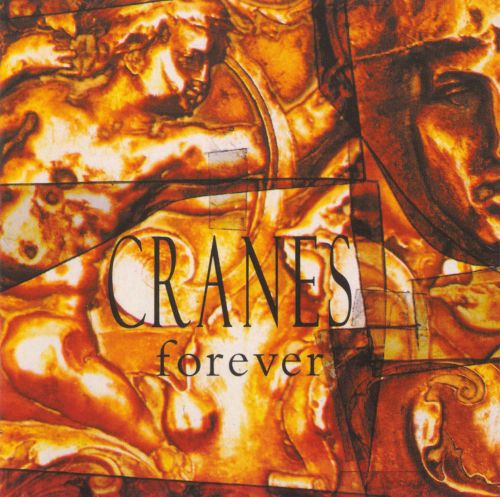
Bookended by two tracks that essentially are the same piece -- "Everywhere," a quicker, almost dancy number that still sounds uniquely Cranes, and the slower, stripped-down "Rainbows" -- Forever finds Cranes moving from strength to strength. Having reached a new level of variety and elegant restraint combined with brusque power on Wings of Joy, the foursome continued exploring such combinations on Forever without simply rehashing the previous album. If anything, the album went to extremes in both directions -- the quieter moments were even more hushed and shadowed, the louder points all that much more whip-snap cruel. "Cloudless" remains the album's most sweetly beautiful, truly haunting moment. Over what sounds like a synthesized combination of plucked violin and keyboards, doubtless played by Jim Shaw, sister Alison delivers a softly husky vocal that slowly grows in strength. More synth strings swell up in the background, just enough, followed later by gentle electric guitar and at the end distant drums. On a completely different tip, there's "Clear," its searing, blunt lead guitar line matched by a massive rhythm slam, only occasionally interrupted by a quieter moment or two before launching back into the full band attack. "Jewel" ended up being a surprise U.K. and U.S. hit, though thanks to a somewhat transformed remix courtesy of longtime fan Robert Smith (in fact, Forever takes its name from a Cure rarity of the same title). On the album, Jim Shaw's original rougher drums stand out, but the attractive poppy groove of the song remains the same, Alison Shaw's singing at her clearest yet over the simple but effective acoustic guitar rhythms and abrasive electric solo. Other highlights include the minimal piano-led "Far Away," with some of Alison's best vocals; the narcotic guitar chime of "Golden"; and the dramatic, blasting surge of "Adrift." [Cherry Red's 2007 reissue included seven bonus tracks, including the pretty, brittle instrumental "The Puppet" and the slow crawl of "Shine Like Stars'')

Perry and Gerrard continued to experiment and improve with The Serpent's Egg, as much a leap forward as Spleen and Ideal was some years previously. As with that album, The Serpent's Egg was heralded by an astounding first track, "The Host of Seraphim." Its use in films some years later was no surprise in the slightest -- one can imagine the potential range of epic images the song could call up -- but on its own it's so jaw-droppingly good that almost the only reaction is sheer awe. Beginning with a soft organ drone and buried, echoed percussion, Gerrard then takes flight with a seemingly wordless invocation of power and worship -- her vocal control and multi-octave range, especially towards the end, has to be heard to be believed. Nothing else achieves such heights, but everything gets pretty darn close, a deserved testament to the band's conceptual reach and abilities. Slow plainsong chants such as "Orbis De Ignis" mix with the harpischord and overlaid vocals of "The Writing on My Father's Hand" and the slow build and sweep of "In the Kingdom of the Blind the One-Eyed Are Kings." Two of Perry's finest vocal moments occur here. The first, "Severance," is a slow, organ/keyboard led number that showcases his rich, warm vocals exquisitely -- it's no wonder that Bauhaus chose to cover it some years later on its reunion tour. "Ullyses," the album's closing track, makes for a fine ending as much as "The Host of Seraphim" did an opening, Perry's delivery almost like a reading from a holy book, the arrangement of strings and percussion rhythmic, addictive and lovely.